The Adams Door Checklist Explained: A Complete Guide for Facility Managers

October 6, 2026
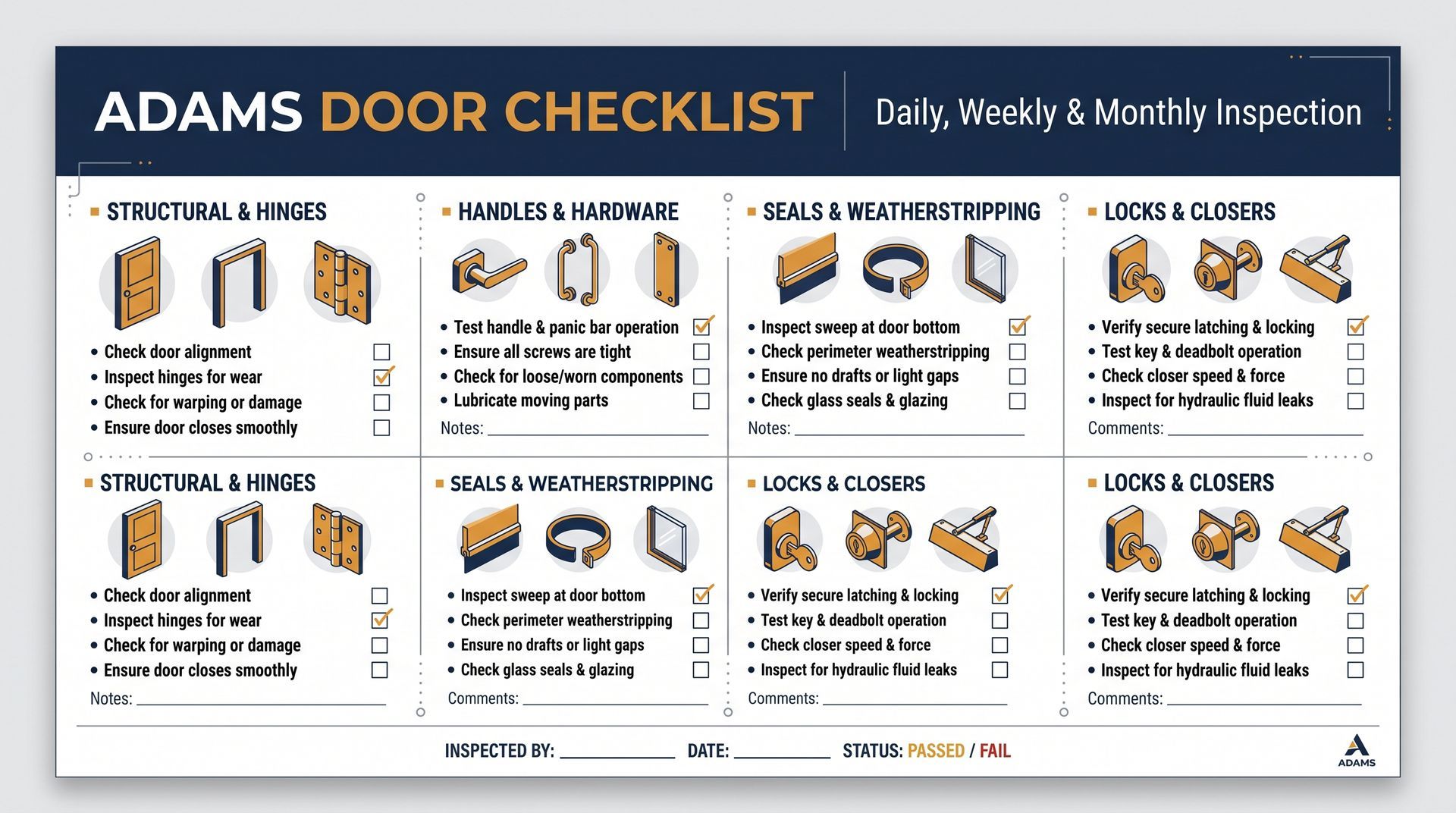
Door inspection checklist poster with six maintenance sections and illustrated door hardware icons.

The Adams Door Checklist is a widely recognized inspection and maintenance framework used to evaluate the safety, performance, and compliance of commercial door systems. It provides a structured way for facility managers, safety officers, and maintenance teams to identify issues before they become serious problems.

For buildings across New York City, Long Island, Westchester County, and Northern New Jersey, using the Adams Door Checklist helps ensure doors operate safely, meet compliance standards, and remain reliable in high-traffic environments.

Why the Adams Door Checklist Matters

Commercial doors are critical to safety, accessibility, and daily operations. Without a consistent inspection process, issues can go unnoticed until failure occurs.

Key Benefits of Using the Checklist

  • Improves safety for occupants
  • Helps maintain ADA and fire code compliance
  • Reduces emergency repair calls
  • Extends the lifespan of door systems
  • Standardizes inspection procedures across properties

For multi-site facilities in NYC or large commercial properties in Northern NJ, having a consistent checklist is essential.

Who Should Use the Adams Door Checklist?

This checklist is designed for professionals responsible for building operations.

Primary Users Include:

  • Facility managers
  • Property managers
  • Maintenance teams
  • Safety and compliance officers
  • Contractors and building engineers

If you oversee commercial entrances in any capacity, this checklist should be part of your routine.

Core Sections of the Adams Door Checklist

The checklist is typically broken into key inspection categories that cover all aspects of door performance.


1. Visual Inspection

This is the first step and often the most revealing.

What to Check:

  • Cracks in glass or panels
  • Bent or damaged frames
  • Loose hardware
  • Signs of wear or corrosion

Why It Matters

Visible damage can indicate deeper structural or mechanical issues.

2. Door Operation and Movement

This section focuses on how the door functions during normal use.

Checklist Items:

  • Does the door open and close smoothly?
  • Is there any resistance or sticking?
  • Are there unusual noises?

Common Issues Found

  • Misalignment
  • Worn components
  • Debris in tracks

3. Automatic Door Sensors and Controls

For automatic systems, sensors are critical for safety.

Inspection Points:

  • Does the door detect motion accurately?
  • Does it remain open long enough for safe passage?
  • Are safety sensors functioning properly?

Why This Is Critical

Sensor failure is a leading cause of injuries and ADA violations.

4. Safety Features and Compliance

This section ensures the door meets safety standards.

What to Evaluate:

  • Emergency stop functions
  • Proper closing speed
  • Accessibility compliance
  • Fire-rated door functionality (if applicable)

Learn more about accessibility standards in the ADA Guidelines.

5. Hardware and Mechanical Components

All moving parts must be in good condition.

Checklist Includes:

  • Hinges and pivots
  • Rollers and tracks
  • Door closers
  • Locks and latches

Common Findings

  • Loose or worn hardware
  • Lack of lubrication
  • Early signs of failure

6. Seals, Gaskets, and Weather Protection

Often overlooked, these components are essential.

Check For:

  • Damaged weather stripping
  • Air leaks
  • Worn seals

Impact

Poor sealing affects energy efficiency and indoor comfort—especially in extreme NY and NJ weather.

How Often Should the Adams Door Checklist Be Used?

The frequency depends on building usage.

Recommended Schedule:

  • High-traffic facilities (NYC retail, hospitals): Monthly
  • Moderate-use buildings: Quarterly
  • Low-traffic properties: Semi-annually

Routine use helps catch problems before they escalate into emergencies.

Common Issues Identified Using the Checklist

Facility managers often discover:

  • Misaligned doors
  • Failing sensors
  • Worn mechanical components
  • Loose or damaged hardware
  • Non-compliance with ADA or fire codes

Addressing these early prevents costly disruptions.

How the Adams Checklist Prevents Emergency Repairs

Many emergency service calls stem from issues that could have been identified earlier.

Preventative Benefits

  • Early detection of wear and tear
  • Reduced risk of sudden failure
  • Improved system reliability
  • Better planning for repairs

Pair checklist use with professional service:
[Preventative Maintenance Programs – https://www.archentsys.com/preventative-maintenance]

When to Call a Professional After an Inspection

The checklist helps identify issues—but not all can be resolved in-house.

Call a Professional If:

  • Doors are misaligned or off-track
  • Sensors are malfunctioning
  • Electrical components are failing
  • Compliance issues are identified

Get expert help here with Commercial Door Repair.

Best Practices for Implementing the Adams Door Checklist

Standardize the Process

Ensure all team members follow the same checklist.

Document Every Inspection

Keep records of findings and actions taken.

Train Staff Properly

Make sure your team understands what to look for.

Act on Findings Immediately

Don’t delay addressing identified issues.

Combine With Professional Maintenance

Routine expert inspections enhance the effectiveness of your checklist.

Local Insight: Why This Checklist Is Essential in NYC & NJ

Buildings across New York City, Long Island, Westchester, and Northern NJ face:

  • Heavy daily usage
  • Strict compliance requirements
  • Seasonal weather challenges
  • High liability exposure

Using a structured checklist like the Adams Door Checklist helps maintain safety and operational reliability in these demanding environments.

FAQs About the Adams Door Checklist

What is the Adams Door Checklist used for?

It’s used to inspect commercial doors for safety, performance, and compliance.

Can facility staff perform the checklist?

Yes, but some issues require professional evaluation.

How long does an inspection take?

Typically 10–20 minutes per door, depending on complexity.

Does the checklist replace professional maintenance?

No—it complements it.

Is it required for compliance?

While not always required, it helps meet ADA and safety standards.

Call to Action: Improve Safety With Expert Support

The Adams Door Checklist is a powerful tool—but combining it with professional service ensures the best results.

Architectural Entrance Systems, Inc supports businesses across:

  • New York City
  • Long Island
  • Westchester County
  • Northern New Jersey

Call: (516) 825-0346
Email:
info@archentsys.com

Schedule an inspection or services and ensure your doors are safe, compliant, and performing at their best—every day.

Recent Posts

People walking through a glass storefront entrance in a city sidewalk setting
September 21, 2026
Learn how to retrofit automatic doors in NYC, Long Island & NJ buildings. Improve accessibility, safety, convenience, and compliance for every property owner today!
Man in dark clothes using a tool to pry up a glass door frame at a brick storefront entrance
September 4, 2026
Should you repair or replace your commercial door? Learn key signs and expert advice for NYC, Long Island & NJ businesses to make the right choice for your business.
Woman in a lobby uses a card to open a door, with office reception in the background.
August 21, 2026
Improve building security with access control systems in NYC, Long Island & NJ. Learn benefits, types, and best practices for safer, more secure buildings this year.
Damaged glass entrance with shattered revolving door and a person standing beside the doorway
August 6, 2026
Learn 7 signs your commercial door needs repair in NYC, Long Island & NJ. Prevent breakdowns and safety risks with expert service before problems worsen today.
Gray double doors in a concrete hallway, with a fire extinguisher and a person walking in the background.
July 22, 2026
Learn fire-rated door requirements in NYC, Long Island & NJ. Stay compliant with safety codes, inspection standards, and building regulations today always.
Two red doors in a red corrugated metal wall, with one narrow doorway and a shadow on the right
July 7, 2026
Learn ADA door requirements in NYC, Long Island & NJ. Ensure compliance, safety, and accessibility for your building with expert guidance today. Contact us today!
Gray corrugated building facade with two windows and a central white door by a sidewalk
June 22, 2026
Use this commercial door maintenance checklist for NYC, Long Island & NJ to prevent breakdowns, improve safety, maintain compliance, and reduce costs—every season.
Modern service garage with illuminated glass doors at night
June 4, 2026
Prevent costly breakdowns with commercial door maintenance in NYC, Long Island & NJ. Learn benefits, schedules, and best practices for year-round reliability.
Glass-walled lobby with brick walls, concrete floor, and a bicycle near the entrance
May 20, 2026
Need emergency commercial door repair in NYC, Long Island, or NJ? Get fast response service for broken doors, security issues, and urgent safety risks today.
Two construction workers installing glass panels outside a modern building
May 5, 2026
Learn commercial door installation in NYC, Long Island, and NJ. Explore types, process, ADA compliance, and expert tips for property owners and managers today.
Show More